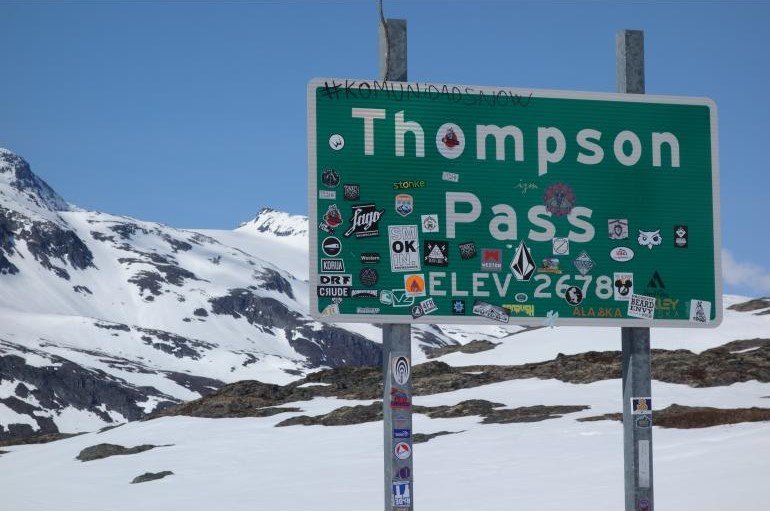
People often ask us how much snow really falls up here. In November 2023, the Richardson Highway - the road that brings every one of our guests from Valdez up to Thompson Pass - answered the question in the most spectacular way.
Six feet, in less than a day
Snow started falling just after midnight on November 8, 2023. By 7 a.m., Alaska Department of Transportation workers measured two feet of new snow at Mile 46 - counting from the coastal town of Valdez. By 4:45 p.m., 65 inches lay on the ground. By 7:30 p.m., 72 inches had fallen in a single storm.
Six feet of snow. In under 24 hours. On a major highway - Alaska Route 4, which snakes 366 miles from Valdez to Fairbanks, crossing passes in both the Chugach and the Alaska Range.
A record, and a mystery from 1963
That snowfall came within a shovel blade of an American record - and it fell almost exactly where that record was set. On February 7, 1963, about a mile away, six feet six inches of snow (78 inches) reportedly fell in a single day. The measurement came from Ralph Lane, foreman at a highway camp and the National Weather Service observer for the area.
Anchorage climatologist Brian Brettschneider long wondered whether that figure could be real. A decade ago he made a pilgrimage to the site, and found red flags: on that same February day, an observer at nearby Thompson Pass recorded only 2.2 inches. Given that Thompson Pass averages over 500 inches of snow a year while the Mile 47 camp averages 150 to 200, the discrepancy is striking. Lane also left the comment column blank next to his extraordinary number.
Flakes the size of silver dollars
But Brettschneider kept digging. He tracked down a meteorologist who had once interviewed Lane about that day and taken notes. Lane, who had retired to Baja and has since passed away, remembered it as if it were yesterday: the flakes were as big as silver dollars, and an avalanche he narrowly escaped blew over him and his snowplow.
Brettschneider even reconstructed a plausible mechanism. A strong, moist flow barreling in from the coastal south through the 14-mile Tiekel River valley, lifted a thousand feet by the mountains, colliding with a cold air mass generated by the Copper River valley to the north. Weighed against the evidence, he concluded, 78 inches in a day was within the realm of possibility.
Bringing the record home
A State Climate Extremes Committee accepted Lane’s measurement as the Alaska record. But the National Climate Extremes Committee rejected it as improbable. Now, armed with the six feet that fell in the same place in November 2023, Brettschneider plans to resubmit the 1963 figure - and, if he succeeds, Lane’s 78 inches would beat the 75.8 inches recorded at Silver Lake, Colorado in April 1921, bringing the American 24-hour snowfall record back to Alaska.
Why this matters to skiers
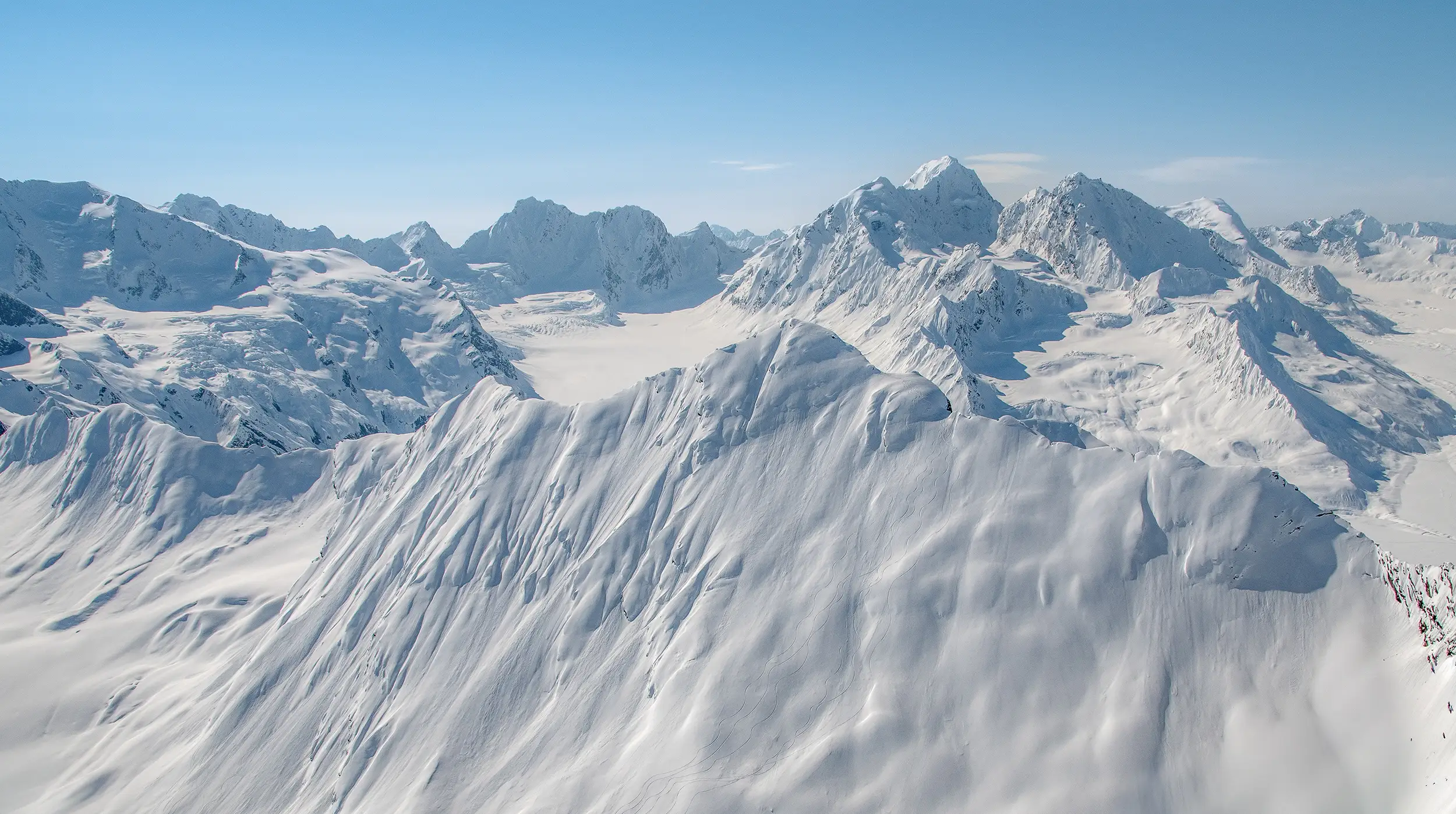
The record zone sits some twenty highway miles from Thompson Pass, so this is not, strictly speaking, our snow. But it is the same storm track, the same coastal moisture funneling up from the Gulf of Alaska, and the same road our guests drive up. It is a reminder of what this corner of the Chugach does when the Pacific opens the tap - and why Thompson Pass averages over 500 inches a year.