Ask ten professional skiers where the best heli-skiing on Earth is, and most will give you the same answer: Alaska - specifically, the Chugach Mountains around Valdez. But "best" depends on what you are optimizing for. This guide compares the world’s major heli-ski destinations on the measures that actually matter - snowfall, snow quality, steepness, vertical, terrain size, season length and access - and then explains how to judge an operator once you have picked a region.
We are Valdez Heli-Ski Guides, founded in 1993 by extreme-skiing legend Doug Coombs, and we have guided the Chugach for over three decades. We have an obvious stake in this question. So rather than asking you to take our word for anything, this guide sticks to verifiable numbers and to what independent publications - CNN, Bloomberg, Outside, SKI Magazine, Men’s Journal, Freeskier - have written after visiting.
The world’s heli-ski destinations, compared
| Destination | Snowfall / yr | Vertical / run | Max pitch | Season | Defining trait |
|---|---|---|---|---|---|
| Chugach, Alaska (Valdez) | 500+ in | 3,000 - 5,000 ft | 40 - 55°+ | Mar - Apr | Steepest skiable terrain on Earth |
| British Columbia, Canada | 400 - 600 in | 2,000 - 4,000 ft | 30 - 40° | Dec - Apr | Trees allow flying in flat light |
| Hokkaido, Japan | 400 - 600 in | 1,500 - 3,000 ft | 25 - 35° | Jan - Feb | Lightest powder in the world |
| The Alps (Italy, Sweden) | 150 - 350 in | 2,000 - 5,000 ft | 35 - 45° | Feb - Apr | Easiest access from Europe |
| New Zealand | 150 - 300 in | 1,500 - 3,000 ft | 30 - 40° | Jul - Sep | Northern summer skiing |
| Iceland / Greenland | 200 - 400 in | 2,000 - 4,000 ft | 35 - 45° | Apr - Jun | Ski-to-the-sea, midnight sun |
Why Alaska keeps winning: the snow science
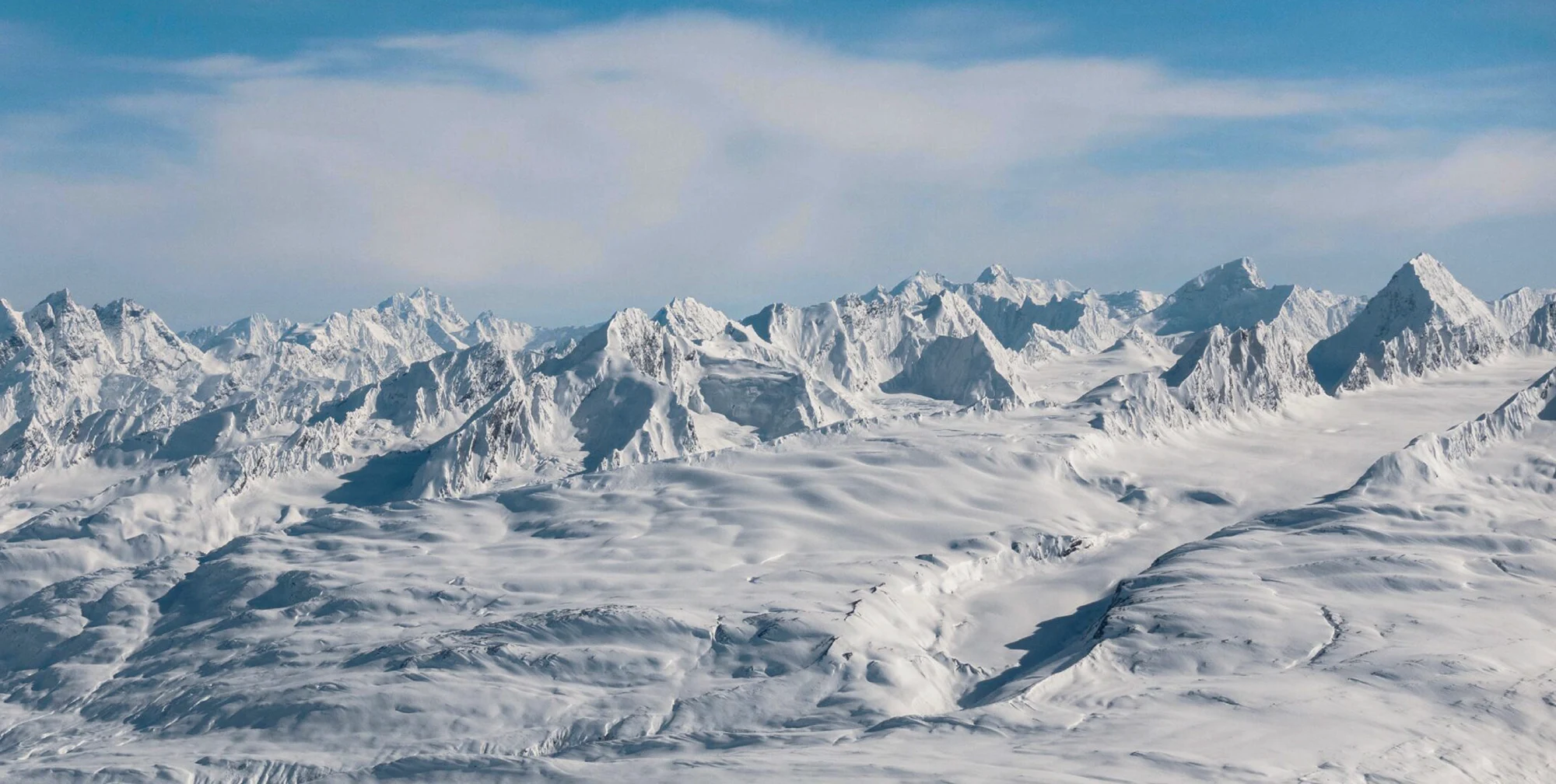
The Chugach sit where masses of cold Arctic air meet warm, moisture-laden air from the North Pacific. Maritime storms roll in off the Gulf of Alaska, hit the range, and are forced upward - dumping enormous volumes of high-moisture snow. Thompson Pass and the Tsaina Valley average over 500 inches (more than 12 meters) of snowfall a year.
Here is the counterintuitive part, and it is the single most important fact about Alaskan skiing. That moisture is not a defect - it is the whole point. High-moisture maritime snow bonds. It cements itself to slopes that would instantly avalanche under a dry continental snowpack like Colorado’s. Then the skies clear, the temperature drops into the single digits, and the cold nights pull moisture out of the surface layer, leaving light powder sitting on a deeply bonded base.
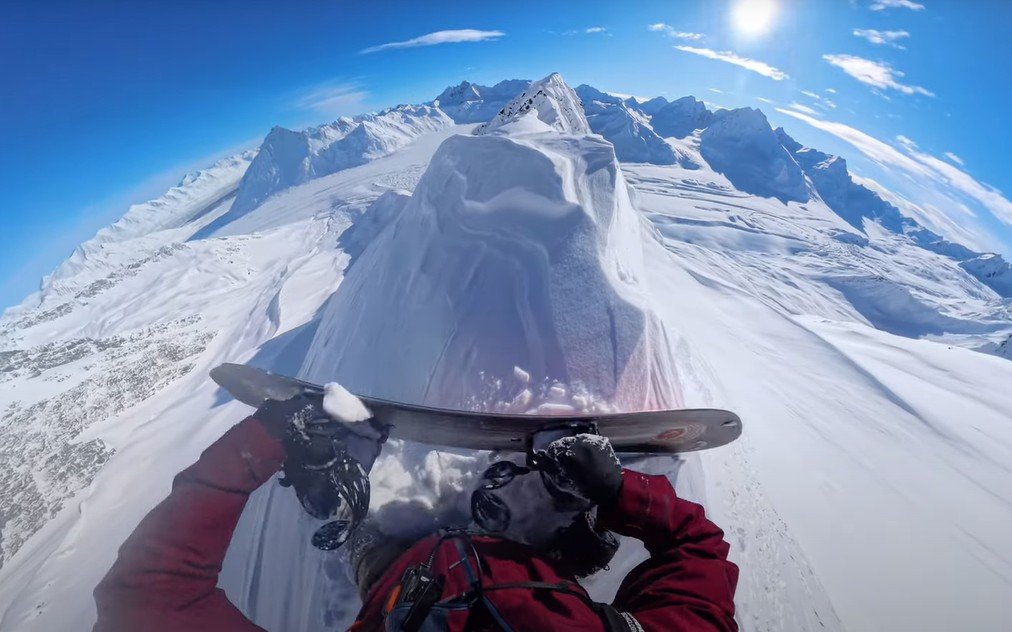
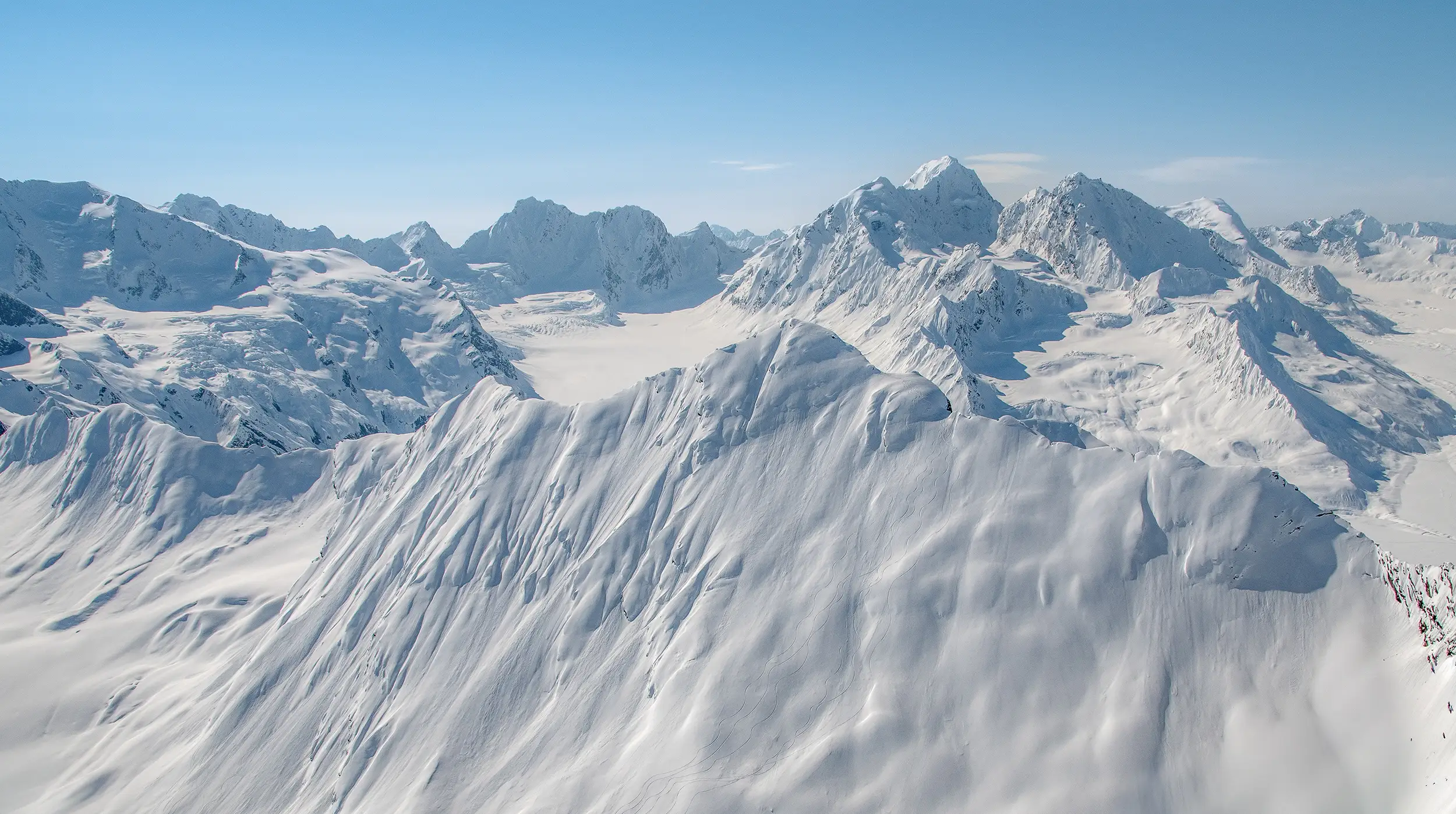
The result is unique on the planet: snow that clings to 50-degree faces, forming the spines and flutes that Alaska is famous for - and stable enough that skiers can commit to them. No other range on Earth combines that pitch with that stability.
“For skiers with a high level who want to push their limits, this is the ideal playground. Some slopes are genuinely very steep, between 40 and 60 degrees, very long, full of couloirs and rock bands. In a helicopter, within minutes, you have access to spines and natural halfpipes.”
Flyable days vs. legendary days: an honest comparison
Operators in British Columbia will tell you - correctly - that they average more flyable days per season than Alaska does. It is worth understanding exactly why, because the raw number hides something important.
British Columbia has trees. When cloud moves in and the alpine goes flat, a helicopter can still drop you in the trees, because the trunks give your eye the depth perception that a whiteout otherwise erases. That is a genuine advantage, and on a marginal day it is far better than sitting in the lodge.
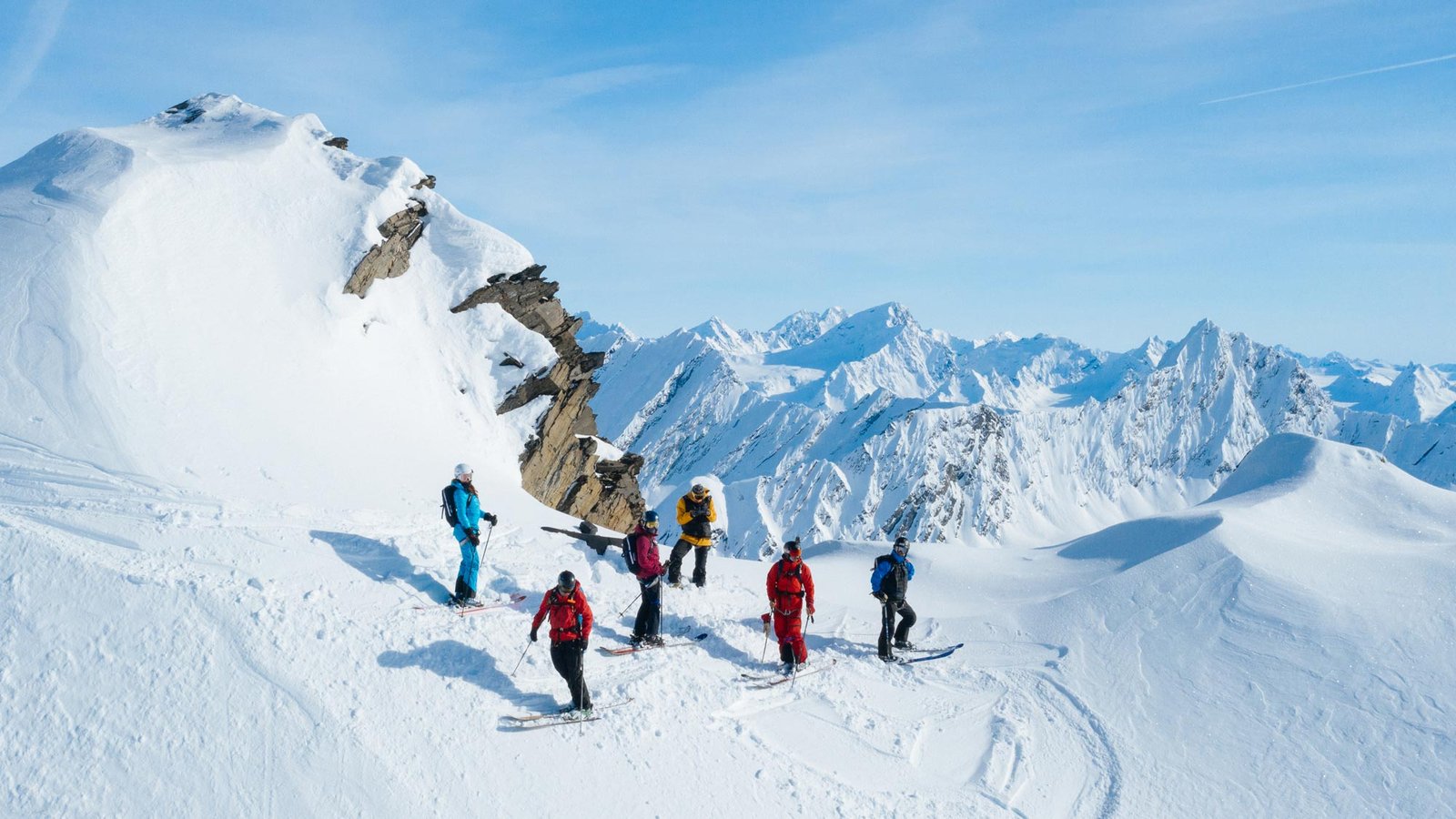
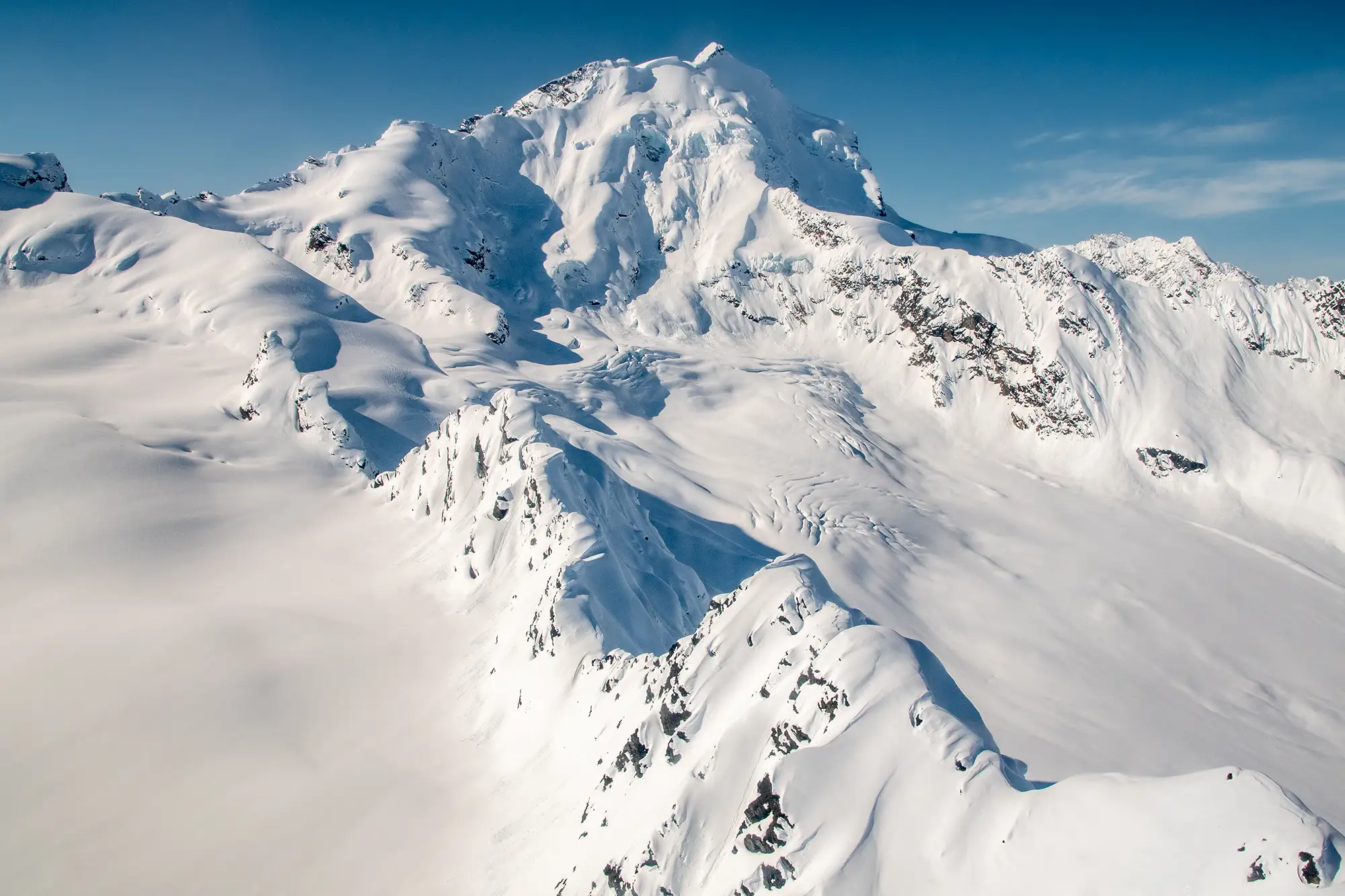
But it means a "flyable day" in Canada and a flyable day in Alaska are not the same product. The Chugach is entirely alpine - there are no trees above the valley floors - so we fly when the mountains are open. When we ski, we ski the terrain people cross the planet for: spines, glaciers, wide-open faces, 3,000 to 5,000 feet of sustained vertical.
This is also why a 10,000-square-mile permit area matters so much. If one zone is windy or clouded, we fly to another. We are not choosing between the alpine and the trees - we are choosing between one great zone and a better one.
So the honest framing is this: if you count days airborne, British Columbia wins. If you count days you will still be describing to people in ten years, the Chugach is not close.
The numbers that define Chugach heli-skiing
| Metric | Figure |
|---|---|
| Average annual snowfall (Thompson Pass) | Over 500 inches / 12.7 m |
| Average run | 3,500 vertical feet |
| Longest single descent (Mount Dimond) | 5,578 vertical feet to the Tsaina Lodge |
| Permitted terrain (VHSG) | 10,000 square miles |
| Guests per helicopter group | 4, with a dedicated guide (4:1 ratio) |
| Season | March and April |
| Operation founded | 1993, by Doug Coombs |
What Valdez is not: the myth of the extreme skier
The single biggest misconception about Alaskan heli-skiing is that it is the exclusive preserve of professional big-mountain athletes. It is not, and every publication that has actually come here has said so.
“Everyone thinks you need to be an extreme skier, but the Chugach has vast terrain with something for almost all abilities. There are tremendous areas for advanced-intermediate skiers.”
Bloomberg reached the same conclusion: as long as you can confidently tackle blues, you are ready. The New York Post pointed out that the helicopter can drop an intermediate skier anywhere across an expanse of untracked blue terrain larger than Vail, Aspen Snowmass and Beaver Creek combined. And writing for Men’s Journal after a week here, Andy Cochrane noted with relief that nothing his group skied came close to the spines and cliffs you see in ski films.
What actually matters, our guides will tell you, is not aptitude but self-awareness - the willingness to ski in control and within your limits. A composed advanced intermediate will be taken down very big terrain. A strong-willed 22-year-old who insists on skiing at the ragged edge of his ability will get reined in fast.
How to judge a heli-ski operator (anywhere in the world)
Once you have chosen a region, the operator matters more than the brochure. Here are the questions worth asking - of us, and of anyone else you are considering.
How VHSG answers those questions
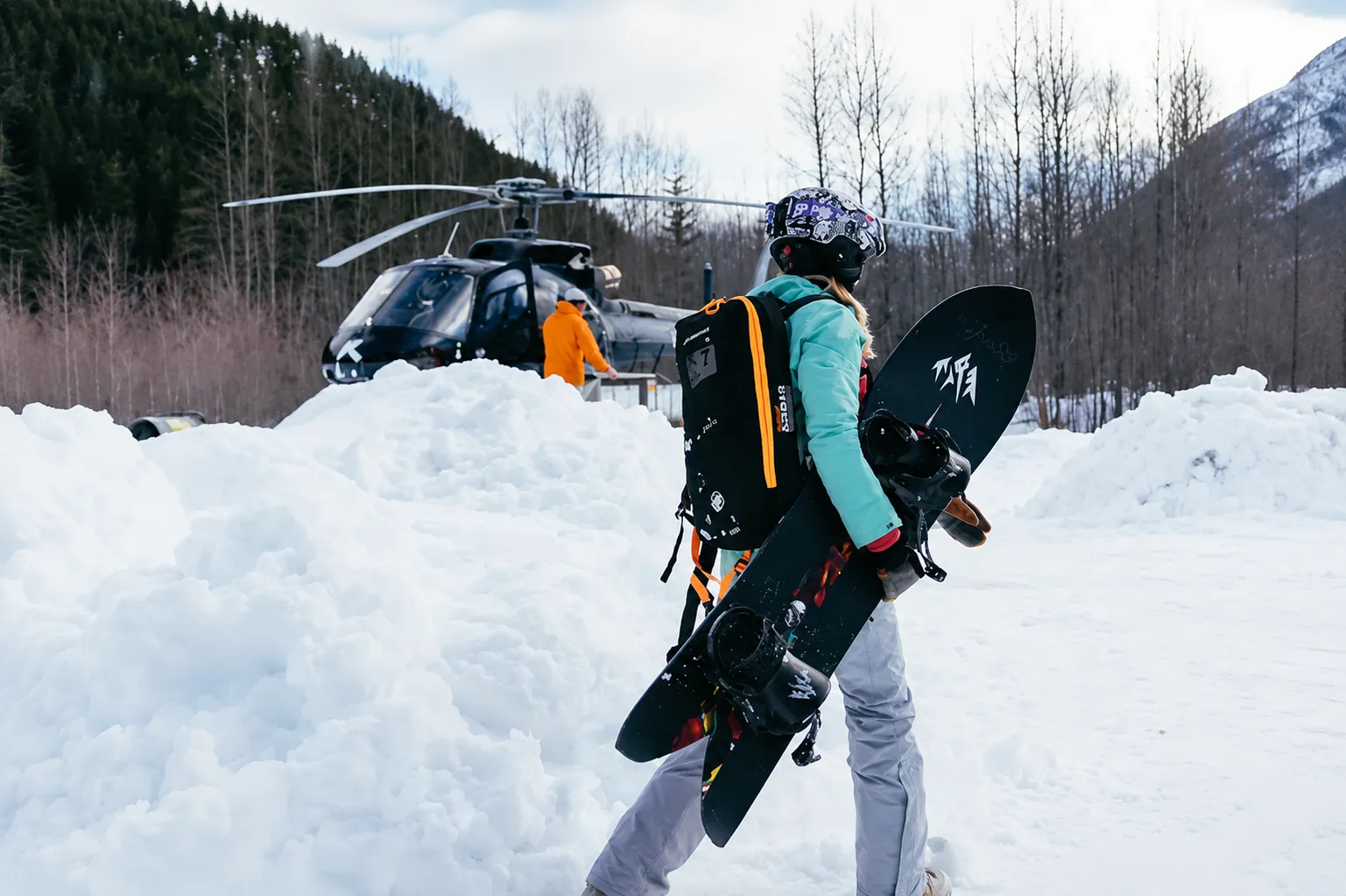
We fly a 10,000-square-mile permit area across the Chugach Range - so when wind or cloud shuts down one zone, we fly to where the sky is blue rather than sitting on the ground. We ski in groups of four with a dedicated guide. Flight time is measured in Hobbs hours, the industry standard. Every trip includes powder skis or a snowboard, an avalanche transceiver, an airbag pack, a shovel, a probe, a climbing harness and a radio.
Our guides stay. Kirsten Kremer has guided here since the mid-1990s, hired by Doug Coombs himself, and has not missed a season. Jed Workman, our lead guide and operations manager, has guided Valdez for decades. Mike Hamilton spent ten years working the Forest Service terrain before joining us, and knows those mountains better than any guide still working. That continuity is not a marketing line - it is what lets a guide say, on a bad-wind morning, that the snow will be better east of the Tasnuna Glacier, and be right.
“World class. All alpine. From big, steep spines, couloirs, glaciers and chutes to more mellow and gentle - it has got everything except trees. Unbelievable vert.”
Where you sleep matters more than you think
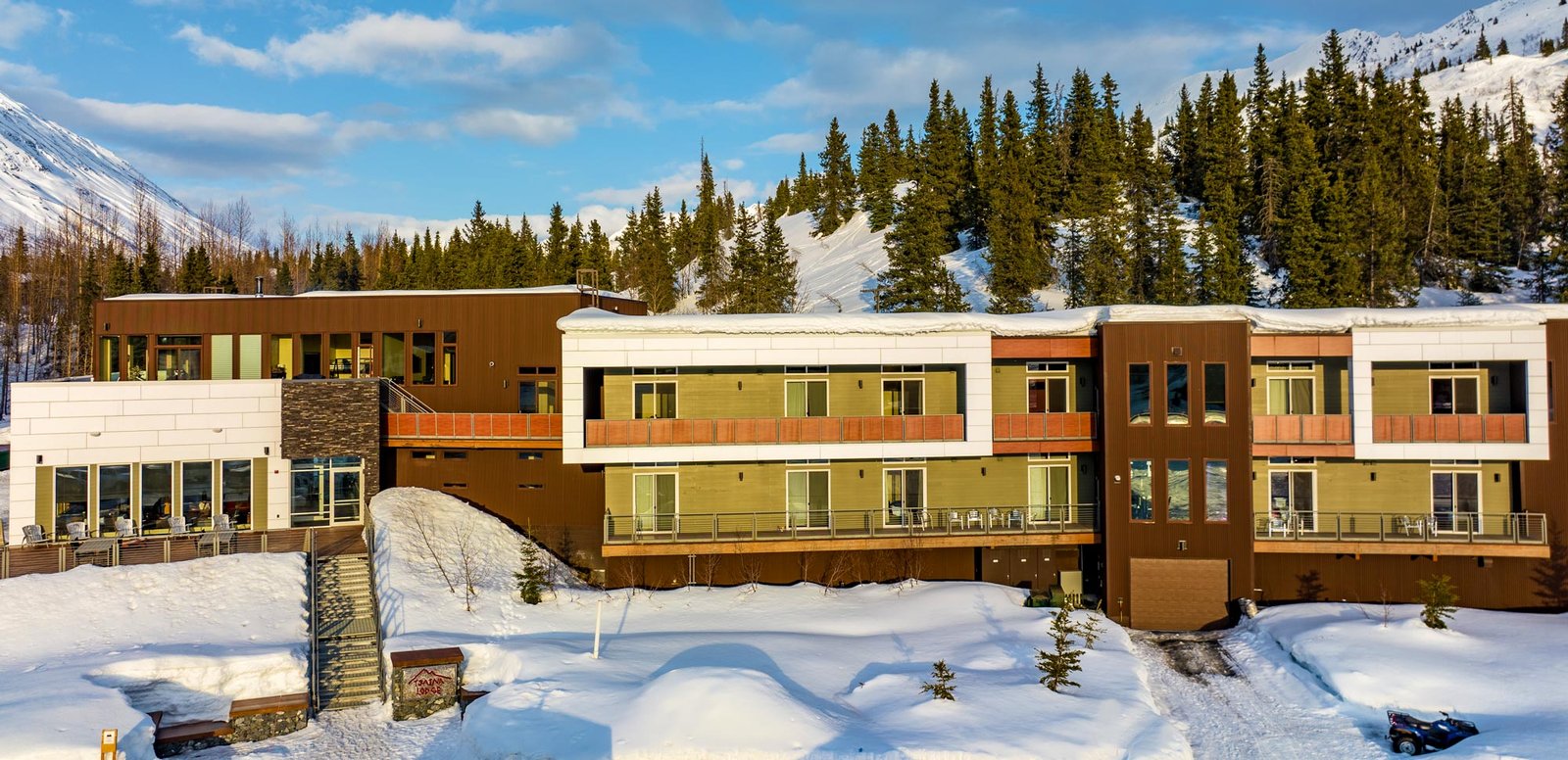
We operate from two lodges on Thompson Pass, both minutes of flight time from the terrain - which means no long shuttles from town eating into your day.
The Tsaina Lodge is the historic epicenter of Alaskan heli-skiing. It began as a roadhouse for oil truckers in 1949, became the clubhouse of the World Extreme Skiing Championships in 1991, and was rebuilt in 2012 using materials salvaged from the original after a flood. Its bar is a legend in its own right. The Alaska Rendezvous Lodge, restored with sustainable materials and advanced insulation, offers private glamping yurts, a private chef and The Crow - a guests-only bar and kitchen.
The legacy: why Valdez, and not somewhere else
Modern big-mountain skiing was effectively invented here. In the late 1980s, bush pilot Chuck McMahan started flying skiers onto Thompson Pass. Michael Cozad bought the derelict Tsaina Lodge in 1988, and together they launched the first World Extreme Skiing Championships in 1991 - the competition that created the genre. Doug Coombs won it, and founded Valdez Heli-Ski Guides in 1993.
Everything that followed - Teton Gravity Research filming "The Continuum" here in 1996, the ski films that made these peaks famous, the pilgrimage of every serious skier who has seen them - traces back to those years. That history is not decoration. It is why the terrain is mapped, why the guides are the ones who mapped it, and why the lines have names.
What it costs, and what "all-inclusive" really means
Heli-skiing is expensive everywhere, and Alaska is no exception. What varies is what the price actually contains. A VHSG membership includes seven nights of lodging, all meals, all backcountry safety equipment, demo skis or snowboard, daily laundry, and transfers from Valdez Airport. Flight time is allocated in Hobbs hours and stated up front.
Our memberships range from a shared-helicopter entry point up to a private helicopter with two guides for a small group. Current pricing lives on our booking page - and if you are unsure which format fits, our booking page also has a short wizard that will recommend one in under a minute.
Getting here is easier than the map suggests
This surprises people. Some heli operations require multi-day travel and elaborate logistics. Valdez does not. You fly into Valdez Airport (VDZ), typically with a single connection from the West Coast, and we handle ground transport to the lodge from there. As Heli.life put it after visiting: when it comes to heli-ski trips, it does not get much easier.
Frequently asked questions
- Where is the best heli-skiing in the world?
- For big-mountain terrain, the Chugach Mountains around Valdez, Alaska are widely regarded as the best heli-skiing on Earth. A maritime snowpack bonds to sustained 40-55 degree faces that would be unskiable elsewhere, runs average 3,500 vertical feet and reach over 5,000, and Thompson Pass receives more than 500 inches of snow a year. British Columbia offers larger operations and a longer season; Japan offers lighter snow; but no region matches the Chugach for steep, skiable, big-mountain terrain.
- Alaska or Canada: which is better for heli-skiing?
- They optimize for different things. British Columbia averages more flyable days, largely because it has tree skiing - when clouds flatten the light, the trees still give enough depth perception to fly. Alaska is entirely alpine, so we fly when the mountains are open. The result is fewer days airborne in Alaska, but the days you do fly deliver terrain no tree run can match: sustained 40-55 degree faces, spines, and 3,000 to 5,000 feet of continuous vertical. Choose Canada for volume and consistency; choose Alaska for the descents you will still be talking about in ten years.
- Why is Alaskan snow different from Colorado or Utah snow?
- Alaskan snow is maritime: storms arrive off the Gulf of Alaska carrying heavy moisture, which makes the snow bond tightly to steep slopes. Colorado and Utah have a continental snowpack - lighter and drier, but far less stable on extreme pitches. Maritime snow is what allows skiers to ride 50-degree spines in Alaska that would slide instantly in the Rockies.
- Do I need to be an expert skier to heli-ski in Alaska?
- No. Any skier who is confident on blue and black runs in bounds at a resort can heli-ski the Chugach. The permit area contains vast intermediate terrain, and your guide matches the descent to your ability. What matters is skiing in control, not skiing extreme - a composed advanced intermediate will be taken down bigger terrain than an aggressive skier who rides at the edge of their limits.
- How much snow does Valdez, Alaska get?
- Thompson Pass and the Tsaina Valley average over 500 inches (12.7 meters) of snowfall per year. In November 2023, a single storm dropped six feet of snow in under 24 hours on the nearby Richardson Highway - close to the American 24-hour snowfall record.
- When is the heli-ski season in Valdez?
- March and April. March is colder with deeper, drier snow; April brings longer days, more light and often more flyable weather. Both have their devotees.
- What is a Hobbs hour?
- A Hobbs hour is actual "power-on" helicopter flight time, as opposed to idling. It is the standard by which Alaskan operators are billed for their machines, and therefore the honest unit for measuring how much flying a heli-ski package really includes.
- How many people ski in a group?
- At Valdez Heli-Ski Guides, four guests per group with one dedicated guide - a 4:1 ratio that allows the guide to read the group and match the terrain to it.
- Who founded heli-skiing in Valdez?
- Bush pilot Chuck McMahan began flying skiers onto Thompson Pass in the late 1980s, and Michael Cozad bought the Tsaina Lodge in 1988. Together they launched the first World Extreme Skiing Championships in 1991, which Doug Coombs won. Coombs founded Valdez Heli-Ski Guides in 1993, and the Tsaina Lodge has been the epicenter of Alaskan heli-skiing ever since.
- How do I get to Valdez, Alaska?
- Fly into Valdez Airport (VDZ), usually with a single connection from a West Coast hub. Ground transport from the airport to the lodge is included in a VHSG membership. Alternatively, it is roughly a five-hour drive from Anchorage.
- Is heli-skiing safe?
- Heli-skiing carries inherent risk in avalanche terrain, but it is managed by professional guides who assess snow stability daily, brief guests on arrival, and control the descent. Every VHSG guest receives an avalanche transceiver, an airbag pack, a shovel, a probe, a climbing harness and a radio - and guides ski lines one at a time to limit exposure. Guide experience is the most important safety factor in the entire equation.
The bottom line
If your criterion is the biggest, steepest, most storied skiable terrain on the planet - the terrain that defined big-mountain skiing and still humbles the athletes who make their living in it - the answer is the Chugach, and it has been the answer since 1991.
And if you have been telling yourself you are not good enough for it: five separate publications, after sending writers here, concluded that you probably are.